
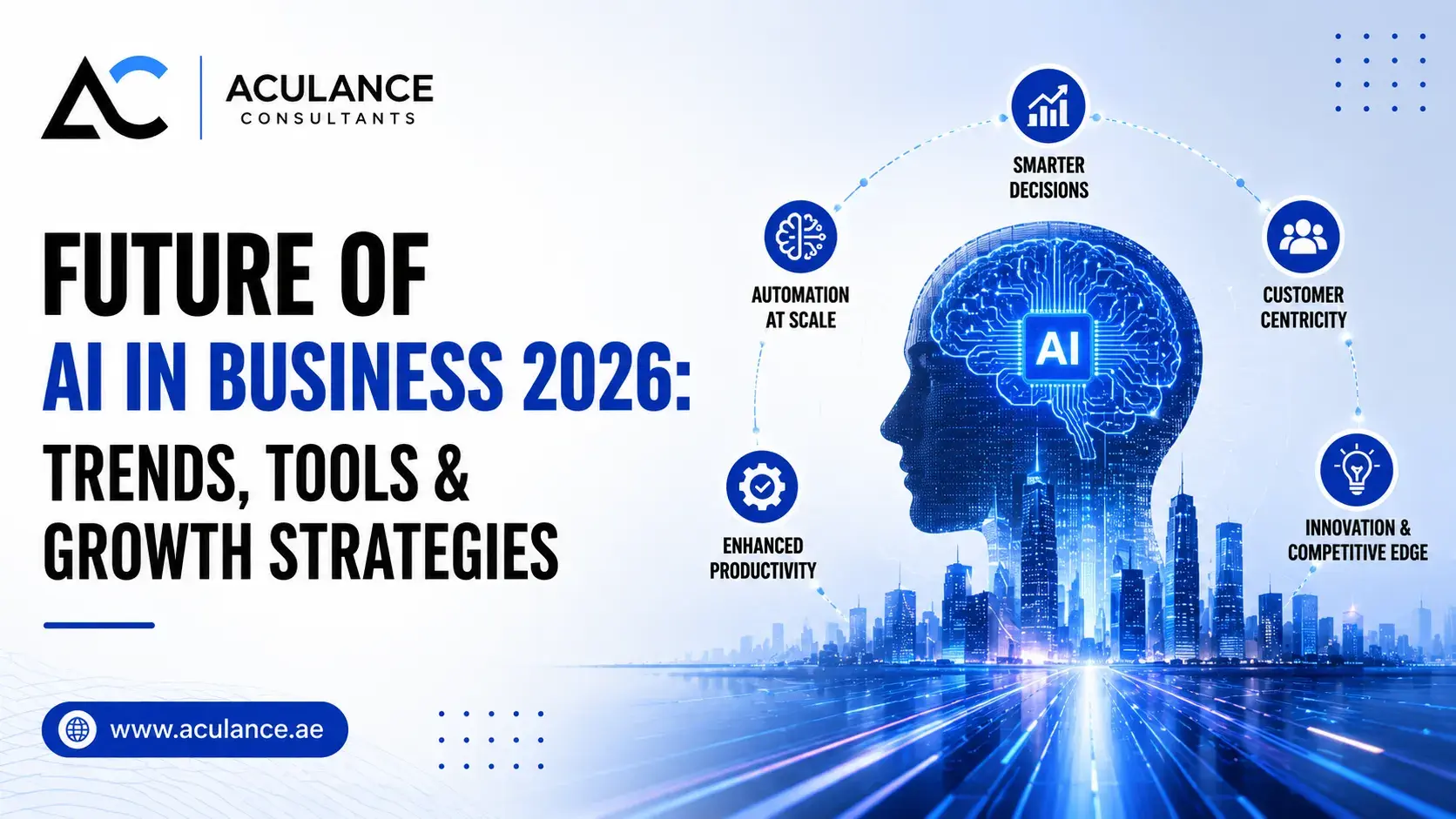
Artificial Intelligence (AI) is rapidly transitioning from a competitive advantage to a business necessity. In 2026, organizations that fail to integrate AI into their core operations risk falling behind more agile, data-driven competitors.
According to industry projections, over 80% of businesses are expected to adopt some form of AI by 2026, making it one of the most transformative technologies of this decade.
From AI marketing automation to predictive analytics and customer experience optimization, AI is fundamentally reshaping how businesses operate, scale, and compete.
What is Artificial Intelligence in Business?
Artificial Intelligence in business refers to the application of machine learning algorithms, data analytics, and automation technologies to streamline processes, improve decision-making, and deliver personalized customer experiences at scale.
Core Components of AI in Business:
- Machine Learning (ML)
- Natural Language Processing (NLP)
- Robotic Process Automation (RPA)
- Predictive Analytics
- Computer Vision
Key Takeaways
- AI enhances efficiency, reduces costs, and improves decision-making.
- Hyper-personalization drives higher engagement and conversions.
- AI-powered automation can increase marketing ROI by up to 30%
- Data quality is crucial for the successful implementation of AI.
- Early adopters gain a significant competitive advantage.
Top AI Trends Shaping Businesses in 2026
1. Hyper-Personalization Powered by AI
AI leverages real-time behavioral data, browsing patterns, and predictive analytics to deliver tailored experiences.
Advanced Example:
Netflix-style recommendation engines applied to:
- E-commerce
- SaaS dashboards
- Real estate listings
Impact:
- 25–40% increase in conversion rates
- Improved customer retention
2. AI Marketing Automation & Predictive Campaigns
AI-driven marketing platforms now automate entire funnels, from awareness to conversion.
Capabilities:
- Predictive audience targeting
- Dynamic ad creatives
- Automated A/B testing
- AI-generated content
Pro Insight:
AI doesn’t just automate, it optimizes in real-time, reallocating budgets to high-performing campaigns.
3. AI in Customer Experience (CX) & Conversational Commerce
Customer expectations in 2026 demand instant, personalized interactions.
Key Innovations:
- AI chatbots with human-like conversations
- Voice assistants handling transactions
- Sentiment-based response systems
Businesses using AI in CX report:
- 40–60% faster response times
- Higher customer satisfaction scores (CSAT)
4. Predictive & Prescriptive Analytics
Beyond predicting outcomes, AI now suggests what actions to take.
Use Cases:
- Customer churn prevention
- Sales forecasting
- Inventory optimization
Result:
Businesses become proactive instead of reactive.
5. AI-Led Digital Transformation Ecosystems
AI is at the center of modern digital ecosystems.
Integrated Systems Include:
- CRM + AI
- Marketing automation + AI
- ERP + predictive analytics
This creates a fully connected, intelligent business environment
Industry-Specific AI Use Cases
1. Real Estate
- AI-driven property matching
- Predictive pricing models
- Virtual property assistants
Agents save time while increasing deal closure rates
2. E-commerce
- Dynamic pricing engines
- Personalized product feeds
- AI-powered inventory forecasting
Example Impact:
- 20–35% revenue growth
3. Marketing & Advertising
- AI-generated ad creatives
- Predictive lead scoring
- Multi-channel automation
4. Healthcare
- AI diagnostics
- Patient data prediction
- Automated workflows
Real-World Case Studies
Case Study 1: AI in E-commerce Personalization
A mid-sized eCommerce brand integrated AI recommendation engines.
Results:
- 35% increase in conversions
- 22% increase in average order value
- 18% boost in repeat customers
Case Study 2: AI Chatbots in SaaS
A SaaS company implemented AI-powered support bots.
Results:
- 40% cost reduction in support
- 60% faster query resolution
- 24/7 support availability
Case Study 3: AI in Marketing Automation
A digital agency used AI-based ad optimization.
Results:
- 28% lower cost-per-click
- 32% higher ROI
- Faster campaign scaling
Best AI Tools for Business Growth in 2026
1. Content & Marketing
- ChatGPT → Content generation, automation
- Jasper AI → Copywriting
- Surfer SEO → AI SEO optimization
2. CRM & Sales
- HubSpot AI → Smart CRM automation
- Salesforce Einstein → Predictive sales
3. Customer Support
- Zendesk AI → Automated support
- Drift → Conversational marketing
4. Data & Analytics
- Tableau AI
- Google Analytics (AI insights)
AI vs Traditional Business Models
| Factor | Traditional | AI-Driven |
|---|---|---|
| Decision Making | Intuition-based | Data-driven |
| Marketing | Mass targeting | Hyper-personalized |
| Operations | Manual | Automated |
| Customer Support | Limited hours | 24/7 AI-driven |
Step-by-Step AI Implementation Framework
Phase 1: Discovery
- Identify pain points
- Audit current systems
Phase 2: Strategy
- Define KPIs
- Select AI use cases
Phase 3: Execution
- Deploy AI tools
- Integrate systems
Phase 4: Optimization
- Analyze performance
- Continuously improve
ROI of AI in Business
Direct ROI:
- 20–40% cost savings
- 30% increase in marketing ROI
- Faster operational efficiency
Indirect ROI:
- Improved brand loyalty
- Better decision-making
- Competitive advantage
AI Risks, Ethics & Compliance
Key Risks:
- Algorithmic bias
- Data misuse
- Over-reliance on automation
Best Practices:
- Transparent AI models
- Ethical data usage
- Human oversight
Voice AI & Future Opportunities
- Voice search optimization (SEO shift)
- Conversational commerce
- AI assistants handling transactions
By 2026, voice-based interactions will dominate search queries.
AI Implementation Checklist
✔ Define business objectives
✔ Prepare clean, structured data
✔ Choose scalable tools
✔ Train teams
✔ Monitor KPIs
Conclusion
AI is no longer an experimental technology; it’s the foundation of modern business growth. Companies that strategically adopt AI in 2026 will unlock new levels of efficiency, personalization, and profitability.
The real question is not whether to adopt AI, but how fast you can implement it effectively.