
Corporate training is no longer limited to scheduled workshops, lengthy presentations, or a library of online courses. In 2026, employees expect learning to be faster, more relevant, interactive, and available when they need it. At the same time, organizations need training programs that can scale, measure results, and respond quickly to changing business requirements.
This is where an AI-powered Learning Management System is making a major difference.
By combining artificial intelligence with modern learning platforms, businesses can create more personalized learning experiences, automate repetitive training tasks, identify skill gaps, and use data to make better learning decisions. Instead of simply storing and delivering courses, today’s LMS can help determine what an employee should learn next and how that learning experience can be improved.
What Is a Learning Management System (LMS)?
A Learning Management System (LMS) is a software platform that helps organizations create, deliver, manage, and track employee training. It provides a centralized place for employees to access courses, complete assessments, and monitor their progress.
Businesses can use an LMS to manage onboarding, compliance, professional development, and role-specific training. Modern LMS platforms can also integrate AI capabilities to personalize learning, recommend relevant content, identify skill gaps, automate tasks, and provide valuable learning insights.
AI-Powered Learning Management System?
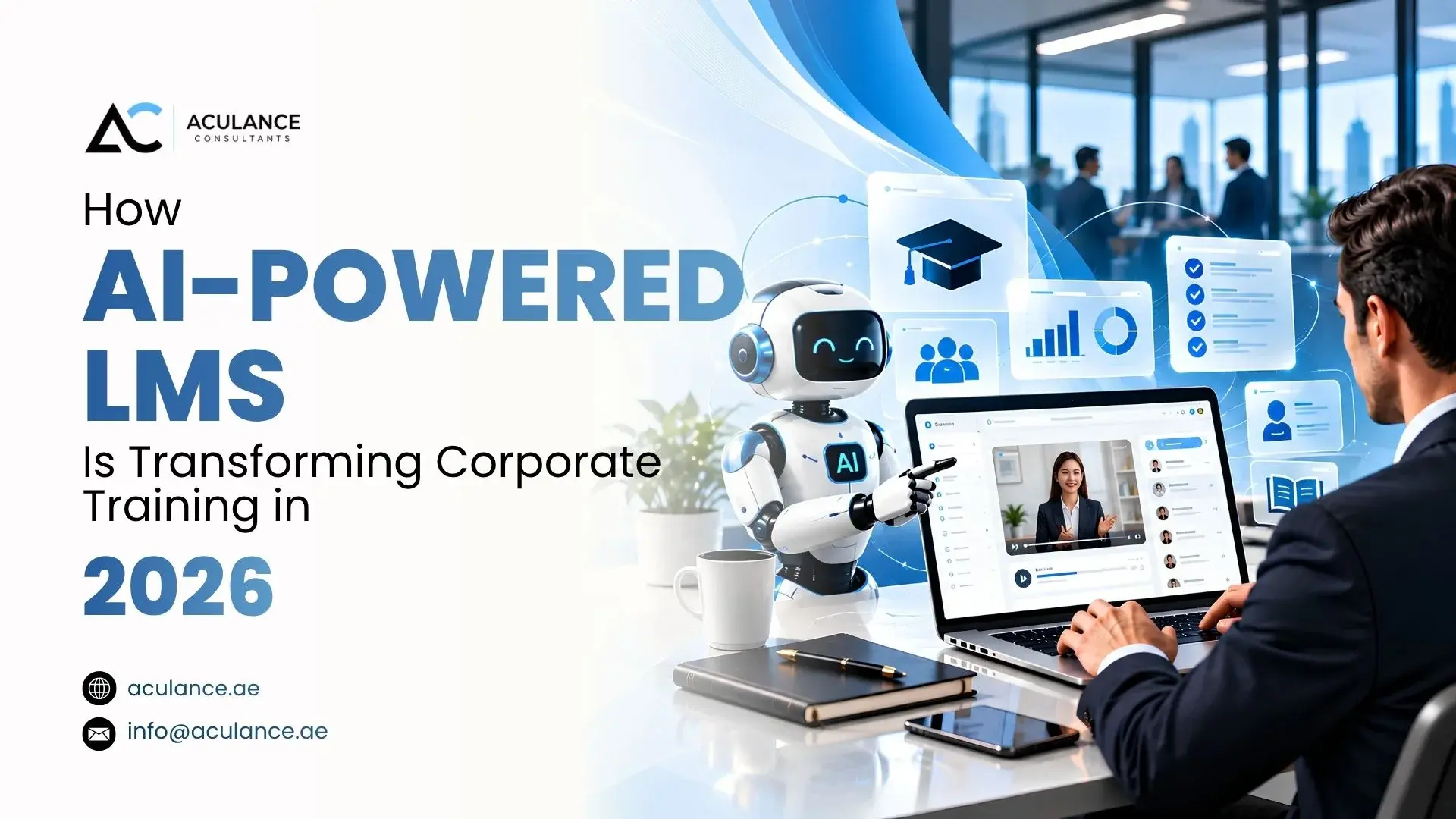
An AI-powered Learning Management System (LMS) combines traditional learning management features with artificial intelligence to create smarter and more personalized training experiences. It can analyze learner performance, recommend relevant courses, identify skill gaps, automate training tasks, and provide learning insights. Unlike traditional LMS platforms, AI-powered systems can adapt learning paths based on individual needs, helping organizations deliver more relevant, efficient, and data-driven employee training.
How AI Is Transforming Corporate Training
1. Personalized Learning for Every Employee
Not every employees do not start their jobs with identical knowledge, experience, or learning requirements. Yet traditional training programs often provide the same material to everyone.
AI changes this approach.
An AI-powered LMS can identify differences in learner performance and recommend content accordingly. An employee who already understands a particular topic may move to advanced material, while another employee may receive additional resources or practice.
This personalized approach can make training feel more relevant because employees spend more time learning what they actually need.
Personalization can also support career development. By comparing an employee’s current skills with the requirements of a desired role, an LMS can help identify potential learning opportunities and create a more focused development journey.
2. Smarter Training Automation
Managing corporate training manually can consume significant time for HR and Learning & Development teams.
Course assignments, reminders, assessments, completion tracking, certification management, and reporting can quickly become repetitive particularly in organizations with hundreds or thousands of employees.
AI-powered platforms can automate many of these activities.
For instance, employees can automatically receive required training based on their role, department, location, or level of responsibility. The system can send reminders when deadlines approach and highlight incomplete learning activities.
This reduces administrative work and gives L&D professionals more time to focus on strategy, content quality, and employee development.
3. Real-Time Identification of Skill Gaps
One of the biggest challenges for modern organizations is knowing which skills their workforce needs next.
Business requirements change quickly. New technologies emerge, customer expectations evolve, and job responsibilities continue to change.
An AI-powered LMS can analyze training performance and learner activity to identify areas where employees may need additional development.
For example, if employees in a particular role consistently struggle with a specific skill assessment, the organization can investigate the issue and introduce targeted training.
This creates a more proactive approach to workforce development. Instead of waiting for performance problems to become visible, businesses can use learning data to identify potential gaps earlier.
4. AI Makes Corporate Learning More Engaging
Employee engagement is one of the most important factors in successful training.
A course may contain valuable information, but employees are less likely to benefit if the content feels repetitive or irrelevant.
AI can help make learning more dynamic by recommending different types of content based on learner behavior. Depending on the platform, employees may receive short lessons, quizzes, simulations, videos, practical exercises, or conversational learning experiences.
AI-powered assistants can also help employees find answers without requiring them to search through an entire course catalog.
This creates a learning experience that feels less like completing mandatory training and more like receiving support at the moment it is needed.
5. Faster Content Creation and Customization
Creating high-quality corporate training content traditionally requires considerable time from subject-matter experts, instructional designers, and L&D teams.
Generative AI and other forms of Artificial Intelligence Development are changing this process.
AI can assist with creating course outlines, generating quiz questions, summarizing information, adapting content for different audiences, and producing learning materials from existing company knowledge.
However, human review remains important. AI-generated content should be checked for accuracy, relevance, tone, and compliance before being delivered to employees.
The best approach is not to replace learning professionals but to give them intelligent tools that accelerate content development.
6. Data-Driven Training Decisions
Training should not end when an employee completes a course. Organizations also need to understand whether the training produced meaningful results.
Modern AI-powered LMS platforms can bring together learning data and turn it into useful insights.
L&D teams can examine completion rates, assessment performance, engagement patterns, skill development, and other learning indicators. These insights can help organizations understand which programs are working and where improvements may be necessary.
Instead of relying only on course completion numbers, businesses can move toward a broader understanding of learning effectiveness.
This is particularly important for organizations that want to connect employee development with wider business objectives.
7. Better Integration With the Digital Workplace
Today’s employees already use multiple digital tools every day. Training should fit naturally into that environment.
A modern Learning Management System can connect with HR platforms, collaboration tools, enterprise applications, and other workplace systems.
These integrations can help keep employee information synchronized and reduce the need for repetitive data entry.
For example, when an employee changes roles, training requirements can be updated automatically. Managers can also receive relevant learning information without manually collecting reports from different systems.
This connected approach is becoming an important part of Digital Education Technology in the workplace.
8. AI-Powered Learning Across Industries
The impact of AI-powered training is not limited to technology companies.
Healthcare organizations can use intelligent learning platforms for ongoing professional and compliance training. Financial organizations can support employees with regulatory and risk-related learning. Retail businesses can personalize sales and customer-service training. Manufacturing companies can provide role-specific safety and operational education.
The common factor is flexibility.
AI allows training programs to respond more effectively to different roles, skill levels, and organizational requirements.
What Should Businesses Consider Before Adopting an AI-Powered LMS?
AI adoption should begin with a clear business objective rather than simply adding AI because it is a popular technology trend.
Before selecting a platform, organizations should consider:
- Training objectives: What business or workforce problem should the LMS solve?
- Personalization: Can the platform adapt learning to individual needs?
- Automation: Which administrative processes can it simplify?
- Analytics: Does it provide actionable learning insights?
- Integration: Can it work with existing business systems?
- Security and privacy: How is employee and organizational data handled?
- Scalability: Can the platform support future workforce growth?
Choosing technology based on actual training requirements can help organizations gain more value from their investment.
The Future of AI in Corporate Training
The next phase of corporate learning will likely become even more personalized and interactive.
AI tutors, conversational assistants, predictive analytics, intelligent skills mapping, automated content creation, and adaptive learning can increasingly become part of everyday employee development.
The role of L&D professionals will also continue to evolve. Rather than spending most of their time managing administrative tasks, they can focus more on learning strategy, employee experience, organizational capability, and human-centered development.
The important point is that AI should support people, not remove the human element from learning. Mentorship, collaboration, feedback, creativity, and practical experience will remain essential parts of effective corporate development.
Contact us :- https://aculance.ae/contact/
Smarter Learning, Stronger Workforce
The AI-powered Learning Management System is transforming corporate training by making learning more personalized, automated, measurable, and responsive.
In 2026, businesses have an opportunity to move beyond static course delivery and create learning environments that adapt to employees and changing business needs. From identifying skill gaps to recommending learning paths and supporting content creation, AI can help organizations make training more relevant and efficient.
As Digital Education Technology continues to evolve, companies that combine intelligent technology with strong learning strategies can build a more adaptable and continuously developing workforce.
The future of corporate training is not simply about teaching employees more. It is about helping them learn the right skills, at the right time, in the right way.
What Does This Means To Business Decision Makers
If you’re responsible for managing or handling the L&D internally then, it becomes crucial to align the new emerging technologies and skills with the organization’s vision to enhance the overall productivity.
With the customization of AI in the LMS platform enables to create the customized learning plan as the need of the teams. Staying ahead in the game is the best strategy to achieve success.
Frequently Asked Questions
1. What is an AI-powered Learning Management System?
It uses AI to personalize learning, automate training tasks, recommend courses, and track employee progress.
2. How does AI improve corporate training?
AI makes training more personalized, engaging, efficient, and data-driven.
3. Can AI identify employee skill gaps?
Yes. It analyzes learner performance and activity to identify areas that need improvement.
4. How does AI help create training content?
AI can help create course outlines, quizzes, summaries, and customized learning materials.
5. What should businesses consider before adopting an AI-powered LMS?
Businesses should consider personalization, automation, analytics, integration, security, privacy, and scalability.