
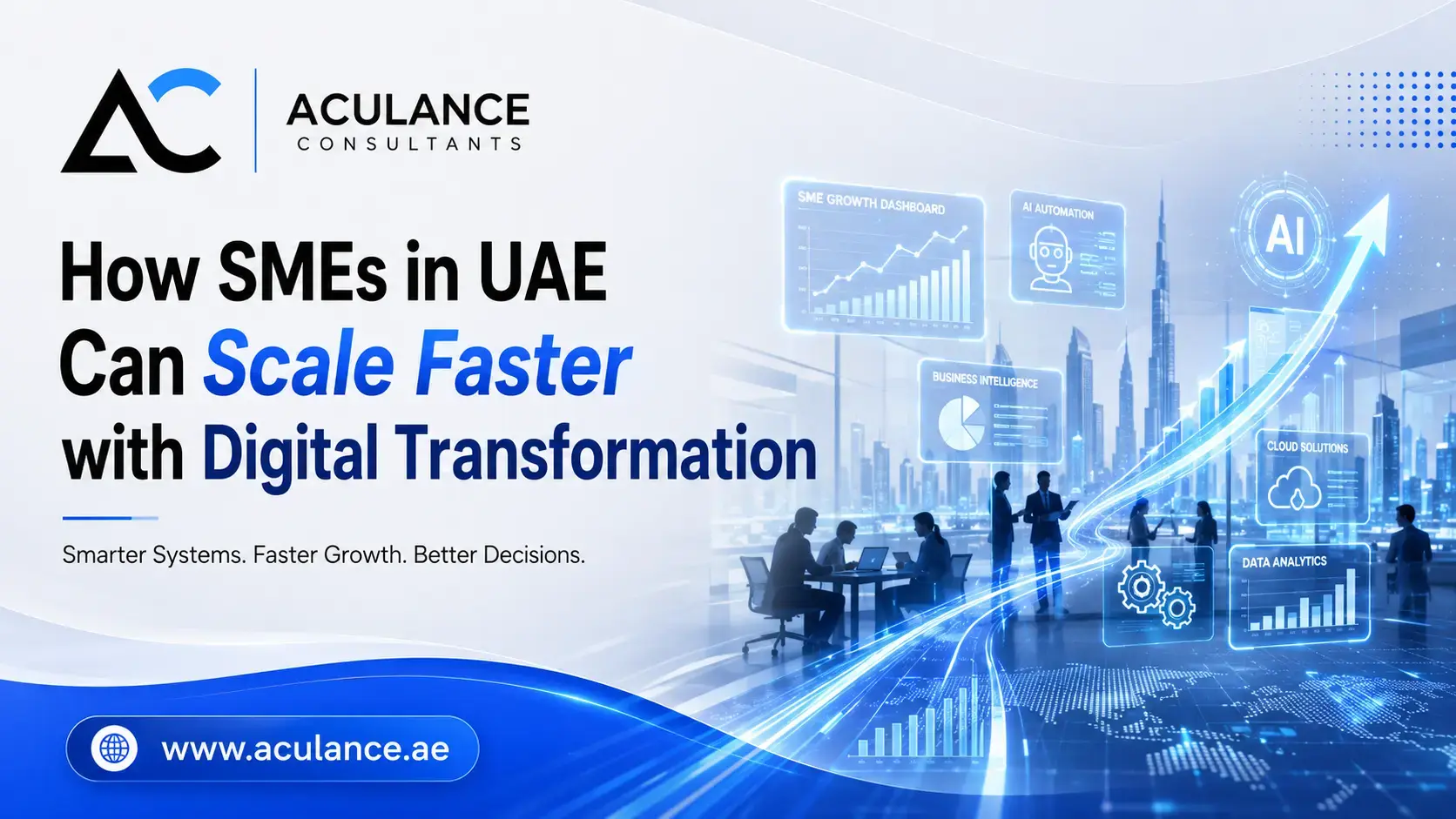
Small and medium-sized enterprises (SMEs) are one of the biggest drivers of economic growth in the UAE. From startups in Dubai to growing businesses in Abu Dhabi and across the GCC, SMEs are becoming increasingly important in sectors like retail, healthcare, hospitality, education, and professional services.
However, competition in the UAE market is growing rapidly. Customers now expect faster services, personalized experiences, and seamless online interactions. Businesses that still rely on manual processes and outdated systems often struggle to scale efficiently.
This is where Digital Transformation for SMEs becomes essential.
Digital transformation helps businesses use technology to improve operations, automate repetitive tasks, strengthen customer experiences, and increase revenue. Whether through CRM systems, AI-powered tools, cloud platforms, or performance marketing, technology allows SMEs to grow faster while improving efficiency.
In this blog, we will explore how UAE Digital Transformation is helping SMEs scale, the technologies businesses should adopt, and the best strategies for sustainable growth in 2026 and beyond.
What Is Digital Transformation for SMEs?
Digital transformation means integrating technology into business operations to improve productivity, customer engagement, and decision-making.
For SMEs, this includes:
- Automating workflows
- Using CRM systems
- Improving digital marketing
- Adopting cloud-based tools
- Tracking business performance through analytics
Many businesses confuse digitization with transformation.
Digitization simply means converting manual tasks into digital formats, such as using spreadsheets instead of paper records.
Digital transformation, however, changes how the entire business operates using automation, analytics, and connected digital systems.
This is becoming increasingly important because customer behavior in the UAE is changing quickly. Businesses must now compete in a highly digital environment where online visibility, fast communication, and personalized experiences directly impact growth.
Common Growth Challenges Faced by SMEs in UAE
Operational Inefficiencies
Many SMEs still rely on manual workflows that slow productivity.
Common issues include:
- Repetitive administrative work
- Poor internal communication
- Delayed reporting
- Lack of automation
These inefficiencies increase operational costs and reduce scalability.
Marketing & Customer Acquisition Challenges
Digital competition across Dubai, Abu Dhabi, and the GCC is becoming stronger every year.
SMEs often struggle with:
- Low online visibility
- Weak lead generation
- Poor conversion tracking
- Ineffective advertising campaigns
Without a strong Business Growth Strategy UAE, businesses may find it difficult to compete in digital markets.
Data & Decision-Making Problems
Many SMEs lack access to real-time business insights.
This creates challenges such as:
- Poor KPI tracking
- Limited customer insights
- Delayed decision-making
- Inaccurate forecasting
Modern businesses need data-driven strategies to scale efficiently.
How Digital Transformation Helps SMEs Scale Faster
Automating Business Operations
Automation is one of the biggest benefits of digital transformation.
Businesses can automate:
- Customer support
- Lead management
- Reporting
- Sales follow-ups
- Internal workflows
Using Business Automation UAE solutions helps reduce manual workload, improve accuracy, and save time.
Improving Customer Experience
Customer experience has become a major competitive factor in the UAE market.
Digital tools help businesses provide:
- Faster response times
- Personalized communication
- Omnichannel customer support
- AI-powered assistance
Better customer experiences often lead to stronger retention and increased revenue.
Enhancing Digital Marketing Performance
Digital transformation improves marketing efficiency through:
- SEO strategies for SMEs
- Performance marketing campaigns
- Social media automation
- Data-driven advertising
These strategies help businesses improve online visibility, generate qualified leads, and track ROI more effectively.
Better Business Intelligence & Analytics
Analytics tools help SMEs monitor performance in real time.
Businesses can track:
- Website traffic
- Lead conversions
- Customer behavior
- Marketing performance
- Revenue growth
A strong Digital Transformation Strategy enables smarter business decisions based on accurate data.
Key Technologies SMEs Should Adopt
Cloud-Based Solutions
Cloud platforms improve scalability and collaboration.
Benefits include:
- Secure data storage
- Remote access
- Lower infrastructure costs
- Improved team collaboration
CRM & Sales Automation
Implementing a CRM for small businesses helps improve customer relationship management.
CRM systems allow businesses to:
- Manage leads efficiently
- Automate follow-ups
- Track sales pipelines
- Improve customer retention
AI & Automation Tools
AI-powered technologies are helping SMEs improve operational efficiency.
Popular tools include:
- AI chatbots
- Predictive analytics
- Automated reporting
- AI-driven marketing tools
These solutions improve speed, accuracy, and customer engagement.
E-Commerce & Digital Platforms
Online business models continue growing across the UAE.
SMEs can benefit from:
- Online selling platforms
- Mobile-first customer experiences
- Digital payment integration
- Automated order management
Businesses without strong digital capabilities may struggle in the future market.
Industries Benefiting Most from Digital Transformation
Several industries in the UAE are rapidly adopting digital technologies, including:
- Retail & E-commerce
- Real Estate
- Healthcare
- Hospitality
- Education
- Professional Services
These industries are using automation, analytics, and digital marketing to improve efficiency and customer experiences.
Step-by-Step Digital Transformation Strategy for SMEs
Step 1: Identify Business Goals
Start by defining clear objectives such as:
- Revenue growth
- Better customer acquisition
- Improved efficiency
- Stronger customer retention
Step 2: Audit Existing Systems
Review current tools and identify technology gaps or inefficient workflows.
Step 3: Prioritize High-Impact Areas
Focus first on areas like:
- Marketing automation
- CRM implementation
- Customer support
- Workflow optimization
Step 4: Choose the Right Technology Partner
Experienced digital transformation consultants in UAE can help businesses implement scalable and effective solutions.
Step 5: Monitor & Optimize Performance
Track KPIs regularly, including:
- Lead generation
- Conversion rates
- Customer retention
- Operational efficiency
Continuous improvement is critical for long-term growth.
Mistakes SMEs Should Avoid
Many SMEs fail during transformation because they:
- Invest in tools without a strategy.
- Ignore employee training
- Lack cybersecurity planning
- Automate everything too quickly.
- Fail to measure ROI
Technology alone does not guarantee success. Strategy and execution are equally important.
Future of Digital Transformation for UAE SMEs in 2026
The future of UAE Digital Transformation will focus heavily on:
- AI-powered business operations
- Automation-first business models
- Hyper-personalized customer experiences
- Advanced business analytics
Businesses that adapt quickly to digital trends will gain stronger competitive advantages across the GCC market.
Conclusion
Digital transformation is no longer optional for SMEs in the UAE. Businesses that adopt modern technologies, automation, analytics, and digital marketing strategies are better positioned for long-term growth and scalability.
From improving customer experiences to increasing operational efficiency, digital transformation helps SMEs compete more effectively in a rapidly evolving market.
Companies that invest early in a strong Digital Transformation Strategy will be better prepared for sustainable growth in 2026 and beyond.