
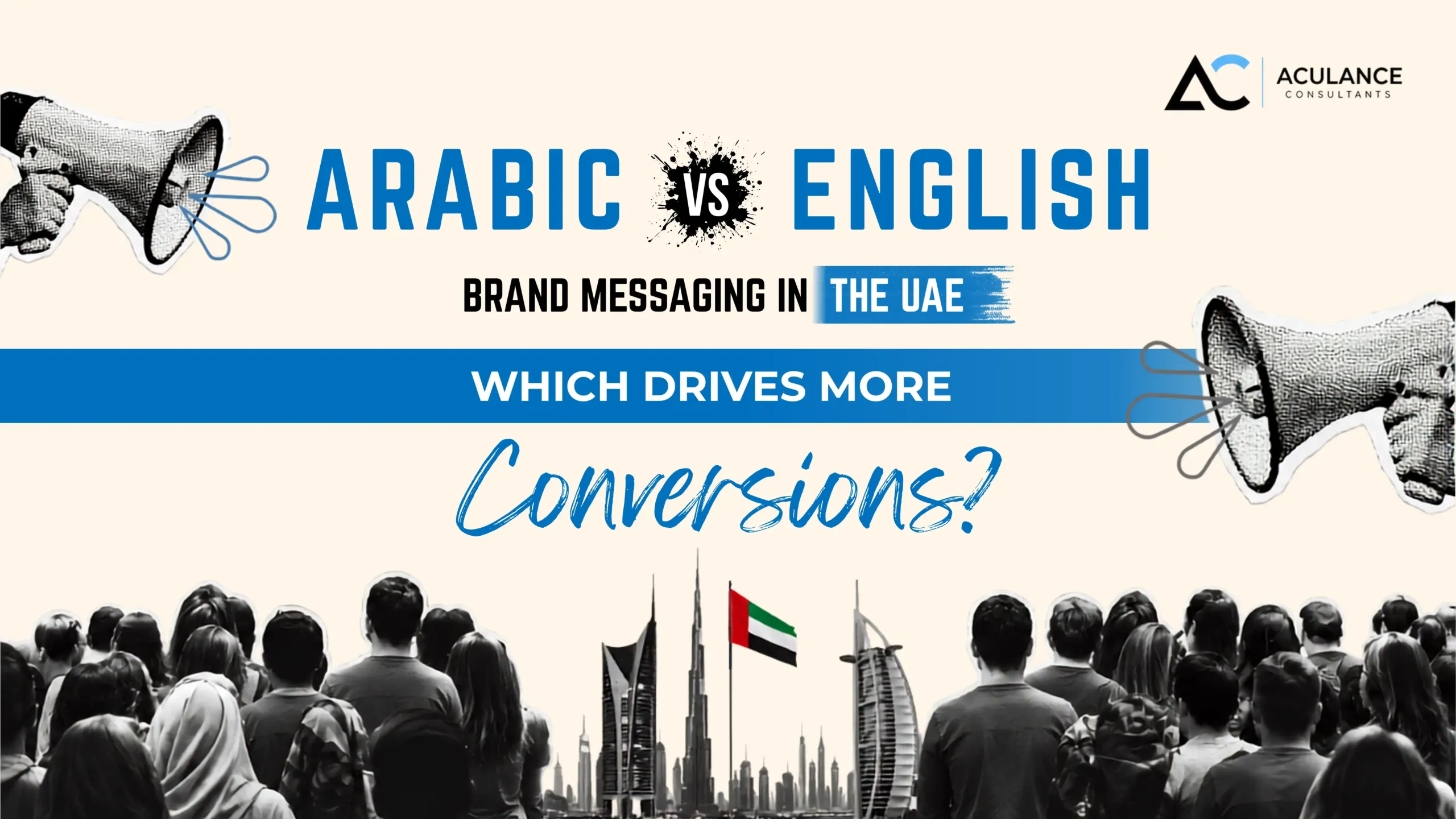
The UAE is one of the most diverse markets in the world. Home to Emirati nationals, Arab expatriates, Western professionals, South Asian communities, and international investors, the country presents unique opportunities and challenges for businesses looking to connect with customers.
One of the most important decisions brands face is choosing the right language for their marketing communications. Should you invest in Arabic messaging, English messaging, or both?
In 2026, language is no longer just a tool for communication. It directly influences customer trust, engagement, brand perception, and conversion rates. As competition increases across industries, businesses are focusing more on localization to create meaningful customer experiences and improve marketing ROI.
Whether you’re implementing performance marketing services, developing a growth marketing strategy, or launching a new campaign, understanding language preferences is critical for success in the UAE market.
Understanding the UAE Consumer Landscape
The UAE’s population consists of multiple customer segments with different language preferences and cultural expectations.
Arabic is the country’s official language and remains deeply connected to culture, identity, and trust. At the same time, English serves as the primary language of business, commerce, tourism, and international communication.
This creates a unique environment where language choice can significantly impact campaign performance.
For example:
- Emirati nationals and many Arab expatriates often respond more positively to Arabic content.
- International professionals and expatriates typically prefer English communication.
- B2B decision-makers frequently use English for business interactions.
- High-value local customers may expect Arabic communication from premium brands.
Understanding these audience differences is the foundation of an effective marketing strategy.
Why Arabic Brand Messaging Matters
Builds Trust and Cultural Relevance
Arabic content creates a stronger emotional connection with local audiences. It demonstrates that a brand understands and respects UAE culture, traditions, and values. Customers are more likely to trust businesses that communicate in their native language, especially when making high-value purchasing decisions.
Improves Engagement and Response Rates
Localized Arabic campaigns often achieve higher engagement among Arabic-speaking consumers because the message feels more relevant and authentic.
Benefits include:
- Better ad engagement
- Higher click-through rates
- Increased content consumption
- Improved lead quality
Industries Where Arabic Performs Best
Several sectors consistently benefit from Arabic-first communication:
- Real Estate
- Banking and Financial Services
- Healthcare
- Government Services
- Luxury Brands
In these industries, trust and credibility play a significant role in purchasing decisions, making Arabic messaging particularly effective.
Common Mistakes to Avoid
Many brands fail to achieve results because they simply translate English content into Arabic.
Common mistakes include:
- Direct word-for-word translation
- Ignoring cultural nuances
- Poor-quality Arabic copywriting
- Inconsistent brand messaging
Successful brands localize their message rather than merely translating it.
Why English Brand Messaging Remains Powerful
Access to a Larger International Audience
English remains the most widely used language for business communication in the UAE.
It allows brands to effectively reach:
- Expatriate professionals
- International investors
- Tourists
- Global business partners
For many organizations, English provides access to the largest segment of potential customers.
Ideal for Digital-First Businesses
English often performs exceptionally well for:
- SaaS companies
- Technology startups
- E-commerce brands
- Professional services firms
- B2B organizations
Many buyers in these sectors consume content, conduct research, and make purchasing decisions in English.
Supports Scalable Marketing Campaigns
English content offers several operational advantages:
- Faster content production
- Easier global expansion
- Better compatibility with international platforms
- Simplified campaign management
This makes English a practical choice for brands focused on rapid growth.
The Limitation of English-Only Marketing
While English provides broad reach, relying solely on English can limit growth opportunities.
Businesses may experience:
- Lower trust among Arabic-speaking audiences
- Reduced engagement in culturally sensitive sectors
- Missed opportunities in local markets
As a result, many brands are moving beyond English-only strategies.
Arabic vs English: Which Delivers Better Conversion Rates?
There is no universal winner.
Conversion performance depends on several factors:
Industry
Language effectiveness varies significantly by sector.
For example:
- Real estate campaigns targeting local buyers often perform better in Arabic.
- Technology and SaaS campaigns frequently generate stronger results in English.
- Healthcare providers may benefit from bilingual communication.
Target Audience
Understanding customer demographics is critical.
If your audience primarily consists of Emirati nationals and GCC investors, Arabic messaging may generate better engagement and lead quality.
If your audience includes international professionals or global buyers, English may produce stronger conversion rates.
Customer Journey Stage
Language preferences may also change throughout the buying process.
English content may attract prospects during the awareness stage, while Arabic communication can help build trust and drive conversions later in the customer journey.
Marketing Channel
Performance can vary across:
- Google Ads
- Meta Ads
- LinkedIn Campaigns
- Email Marketing
- Landing Pages
Continuous testing is essential to identify what works best.
The Rise of Bilingual Marketing in the UAE
Leading brands increasingly recognize that they don’t need to choose between Arabic and English.
Instead, they use both.
A bilingual strategy allows businesses to connect with a broader audience while maintaining cultural relevance.
Benefits of a Bilingual Strategy
- Expanded audience reach
- Higher engagement rates
- Improved customer experience
- Increased conversion opportunities
- Stronger brand credibility
Customers appreciate having the option to engage in their preferred language.
Key Bilingual Touchpoints
Successful brands implement bilingual communication across:
- Websites
- Landing pages
- Social media content
- Email campaigns
- Paid advertising
- Customer support channels
This creates a seamless and personalized customer experience.
How to Choose the Right Language Strategy
Use Arabic If:
- Your audience is primarily local or regional.
- You operate in real estate, finance, healthcare, or government sectors.
- Cultural trust is critical to conversions.
Use English If:
- You target international customers.
- Your business is primarily B2B.
- You operate globally.
Use Both If:
- You want maximum market penetration.
- Your audience includes both locals and expatriates.
- Growth and scalability are priorities.
For most UAE businesses, bilingual communication offers the strongest long-term advantage.
Future Trends in UAE Brand Messaging
Several trends are shaping the future of marketing in the region.
AI-Powered Personalization
Brands are increasingly using artificial intelligence to deliver personalized content experiences in multiple languages.
Predictive Analytics for Better Conversions
Businesses investing in predictive analytics consulting can identify customer preferences, forecast behavior, and optimize messaging for higher conversion rates.
Voice Search and Multilingual SEO
As voice search adoption grows, businesses will need optimized Arabic and English content to remain visible in search results.
Growing Demand for Native Arabic Content
Consumers increasingly expect authentic Arabic experiences rather than simple translations, creating new opportunities for brands that invest in high-quality localization.
Conclusion
When it comes to Arabic vs English brand messaging in the UAE, there is no one-size-fits-all solution.
Arabic excels at building trust, cultural relevance, and engagement among local audiences. English remains essential for international communication, B2B marketing, and digital-first businesses.
However, the strongest results often come from a bilingual approach that combines the strengths of both languages.
Businesses that integrate localized content, data-driven insights, performance marketing services, and a well-defined growth marketing strategy are more likely to improve customer engagement, increase conversions, and achieve sustainable growth in the UAE market.
Working with an experienced digital marketing consultant can help brands determine the right language mix, optimize campaigns, and maximize ROI in an increasingly competitive landscape.